What pressure washing costs in Langford
No honest company prices a Langford house off a menu, because the square footage, the storeys, the cladding material and how much growth is on it all move the number. What you can do before accepting any quote is check it against published market data. The Fixr house pressure washing cost guide puts a whole-house exterior wash in a range of $500 to $900 with a national average near $700, a low end of $300 on a small house with light grime and a high end of $2,000. It prices the work per area as well, at $0.30 to $0.80 per square foot, with the $700 midpoint describing a 2,000 square foot vinyl-sided home carrying normal grime. Those are US figures, so read them as the shape of the market rather than as a Langford rate.
Five things move a Langford quote away from that midpoint:
- Area, not rooms. Pressure washing is priced by surface. A wide double driveway with an apron and a wrap-around walk is more square footage than the house it sits in front of.
- Which surfaces are in the job. Driveway only, siding only, or both are three different visits. Both together is cheaper than two trips because the set-up happens once.
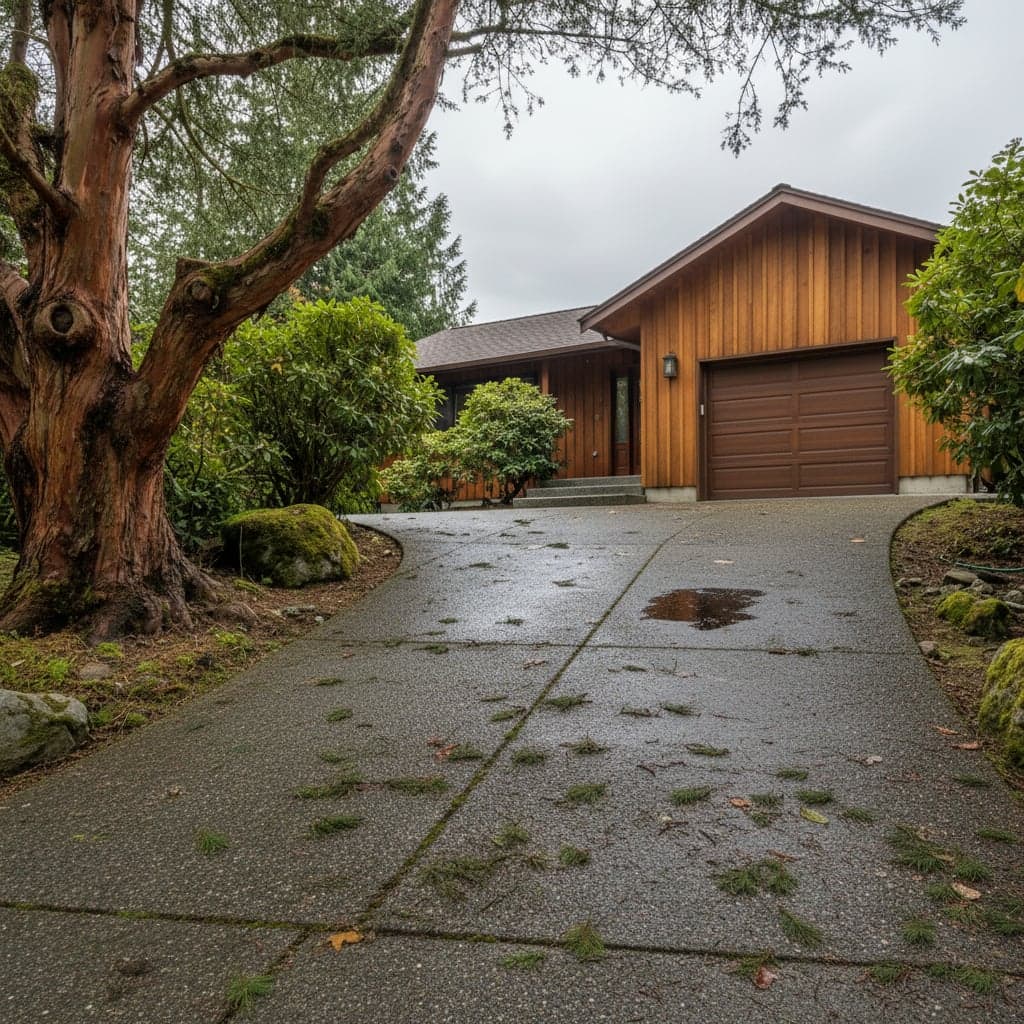
- How much growth is on it. A driveway washed last year is a rinse. A driveway with three seasons of algae in the surface pores needs a detergent dwell before anything comes off, and that is time.
- Storeys and access. Second-storey siding, a steep lot, or a wall behind a hedge changes the method rather than just the minutes.
- Surface condition. Spalling concrete, loose paver sand, failing deck stain and soft cedar all need the pressure backed off, which slows the pass down. It also means the honest answer on some surfaces is to wash gently and tell you what you are actually looking at.
Chirp quotes flat rate and free, in writing, before any work starts. Estimates vary by property, so the number that counts is the one written against your address after a look at the surfaces.
How much pressure each surface can take
This is the part most of the trade glosses over, and it is the part that decides whether your house is cleaner or damaged. Useful context for how the word “pressure” gets thrown around: a pressure exceeding 34 MPa (5,000 psi) is what section 12.97 of British Columbia’s OHS Regulation Part 12 defines as high pressure washing or jetting, a cutting process with its own risk assessment and restricted work zone rules. Residential exterior cleaning runs nowhere near that. A homeowner machine and a professional rig both sit in the low thousands of psi, which is plenty to strip cedar grain or push water through a lap joint, and the skill is in turning it down rather than up.
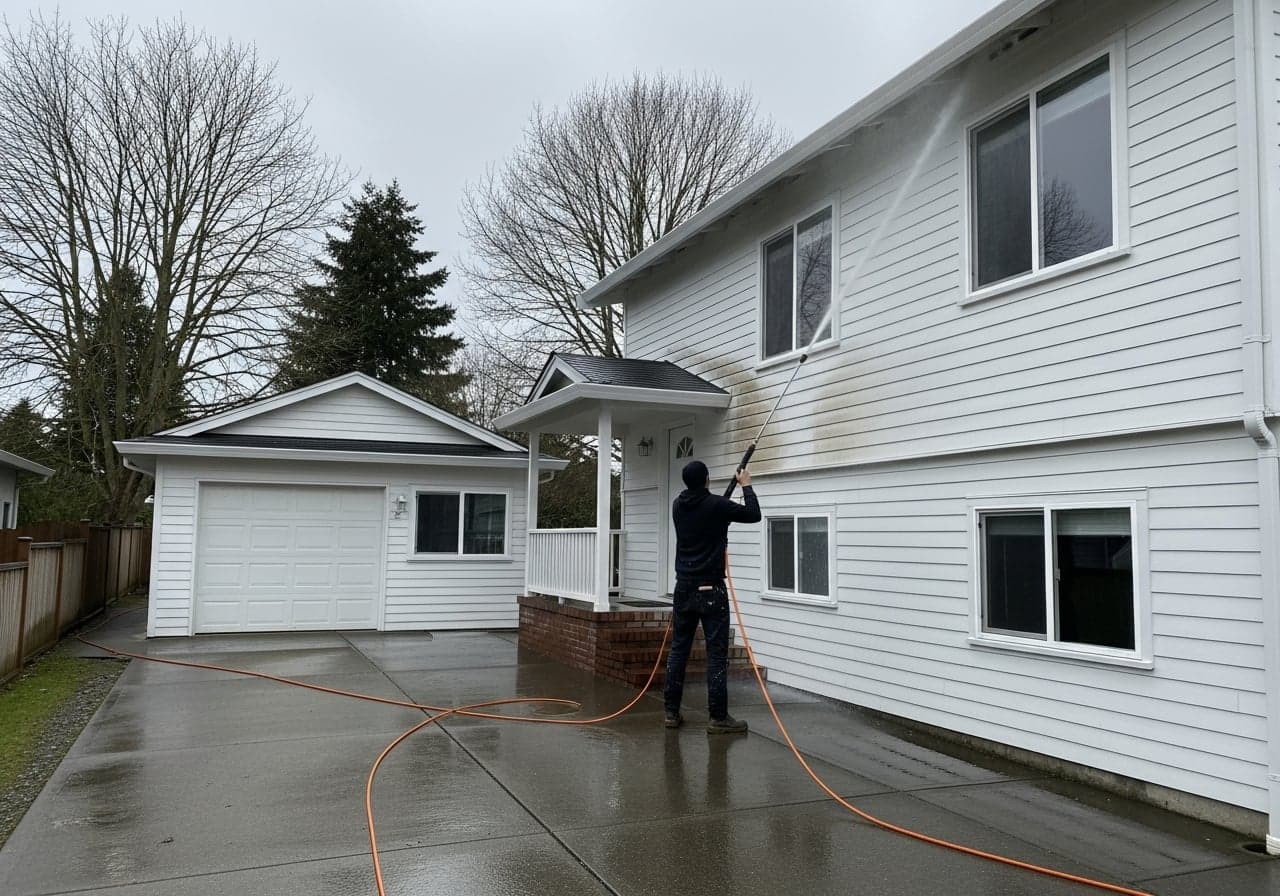
On cladding, the governing rule is direction as much as pressure. The Vinyl Siding Institute cleaning guidance says to hold a power washer straight at eye level and never aim the stream upward, because that forces water behind the siding panels, and it warns that some manufacturers do not recommend power washing at all while others cap the PSI and the cleaners you may use. It also notes that routine cleaning of vinyl needs no more than mild soap and water from a garden hose. That is the whole case for soft washing: the detergent does the lifting and the water only rinses.
So the surface list we work to, hardest to softest:
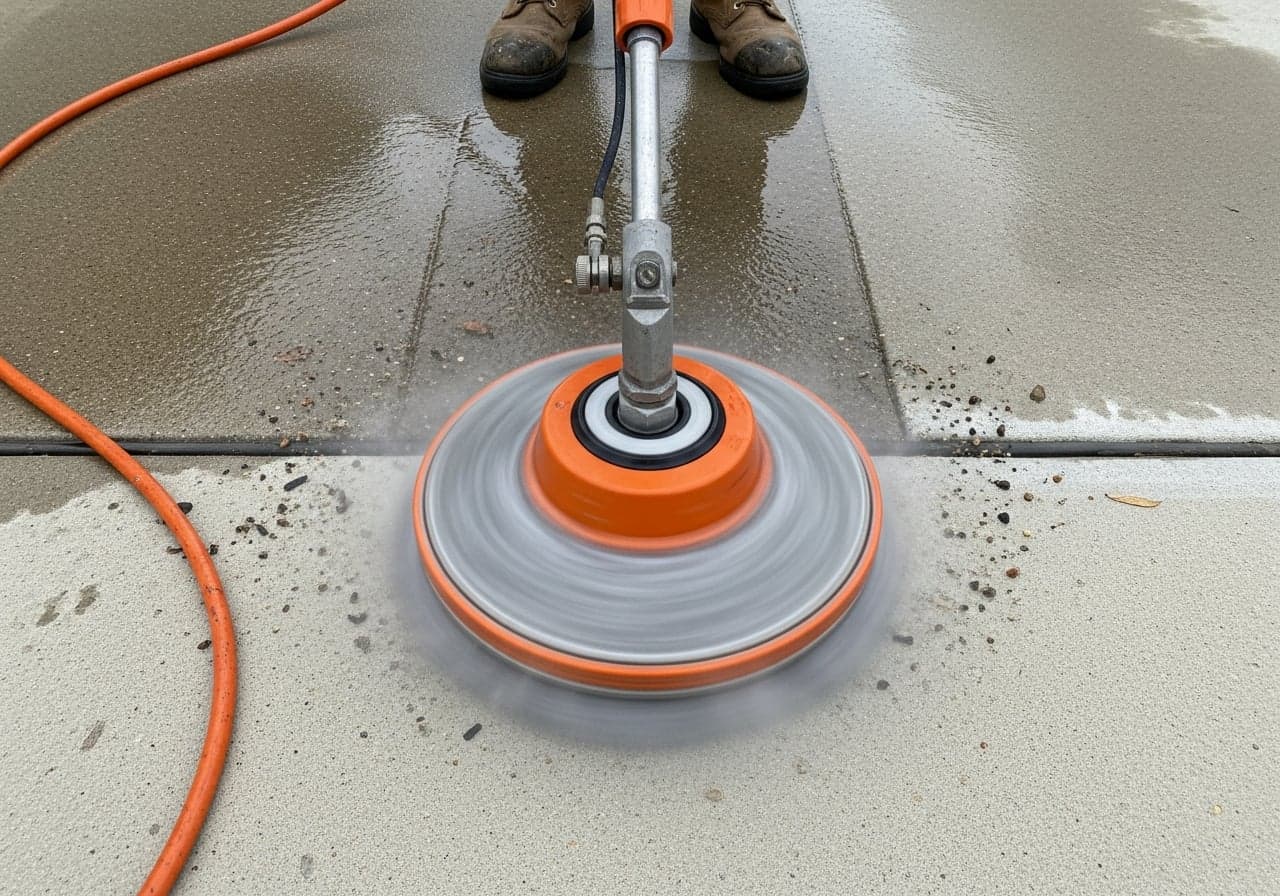
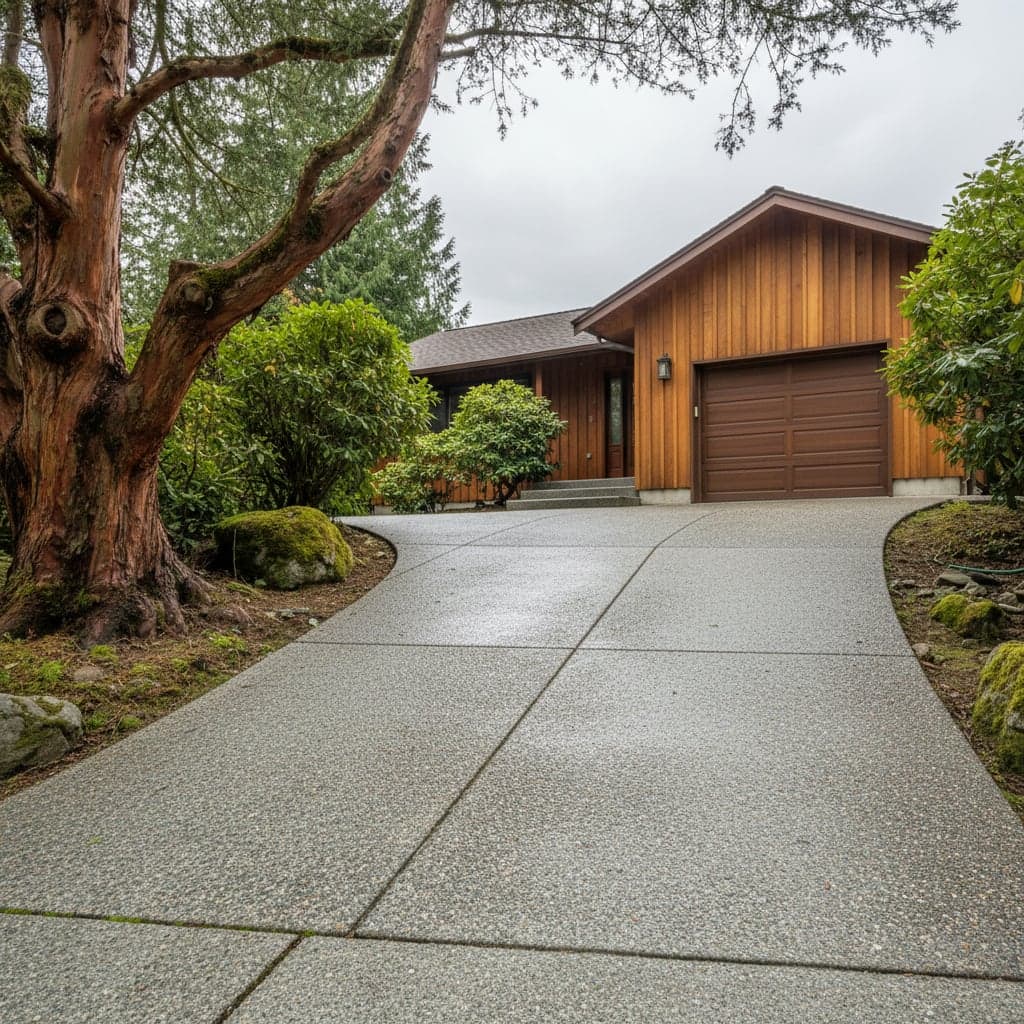
- Concrete, exposed aggregate, pavers and stone. Full pressure through a flat surface cleaner rather than a wand, so the pass is even and you get no zebra striping down the driveway.
- Stamped and sealed concrete. Lower pressure. The sealer is the finish, and blasting it off turns a clean into a reseal.
- Vinyl, fibre cement and brick. Soft wash. Detergent, dwell, rinse at low pressure, held level and never angled up under the laps.
- Cedar siding, shake, fences and decks. The softest setting on the job. Cedar is open-grained and high pressure raises the fibre, which looks clean for a week and then weathers rough.
- Asphalt shingle roofs. Soft wash only, never pressure. Roof moss is a separate quote, which is why it lives on the roof cleaning page rather than here.
When you can pressure wash in Greater Victoria, and what the bylaw says
Worth knowing before you book a summer wash, because it catches people out: outdoor water use in Langford and the rest of the region is governed by a bylaw, not by goodwill. The Stage 1 watering schedule of Water Conservation Bylaw No. 4099 is in effect from May 1 through September 30 every year and applies to every customer of the Regional Water Supply System drawing drinking water from the Sooke Lake Reservoir, which is Langford along with the rest of Greater Victoria (CRD regional watering schedule).
Under that Stage 1 schedule, power washing is permitted. The Capital Regional District states plainly that you may power wash sidewalks, driveways, parking lots, exterior windows and exterior building surfaces using no more water than necessary to complete the task, while avoiding excess run-off and water spreading to surrounding areas, and it asks you to consider a stiff broom where a broom would do. Stage 2 and Stage 3 restrictions are the ones that would close the door on washing driveways and building surfaces, and the CRD notes it has not needed to call either since the Sooke Lake Reservoir dam was raised in 2002 (CRD regional watering schedule).
Two practical consequences for a Langford booking. First, a summer wash is legal, so the timing question is about results rather than permission. Second, “no more water than necessary” and “avoid excess run-off” are the bylaw’s words, and they are also the reason a detergent-and-dwell soft wash beats standing there with a wand: the soap shortens the rinse. Runoff handling matters for a second reason too. A storm drain is not a treatment plant, so detergent that reaches one goes to the water untreated. We keep rinse water on the lawn and the beds and away from the gutter line.
On timing, the Greater Victoria pattern is straightforward:
- Late spring, roughly April into June. The most popular window. Clears the algae and the black streaking that the wet months put on north-facing walls and shaded driveways, and it puts the house right for the summer.
- Early autumn, September into October. Clears the summer dust, pollen and the first of the leaf tannin before the rain sets in. This is the visit most homes pair with gutters, because the gutters need doing then anyway.
Deep winter is the one stretch worth avoiding. Surfaces stay wet, nothing dries down to its real colour, and growth comes straight back.
What to check before booking a pressure wash in Langford
Most of what separates a good exterior wash from a cheap one is visible in the quote before anybody turns up:
- Ask which pressure goes on which surface. If the answer is one setting for the whole house, that is the answer that strips cedar and drives water behind vinyl. A quote should name the method per surface.
- Surface cleaner on the flatwork, not just a wand. A wand leaves fan-shaped striping across a big driveway that you cannot un-see once the concrete dries. A flat surface cleaner gives an even pass.
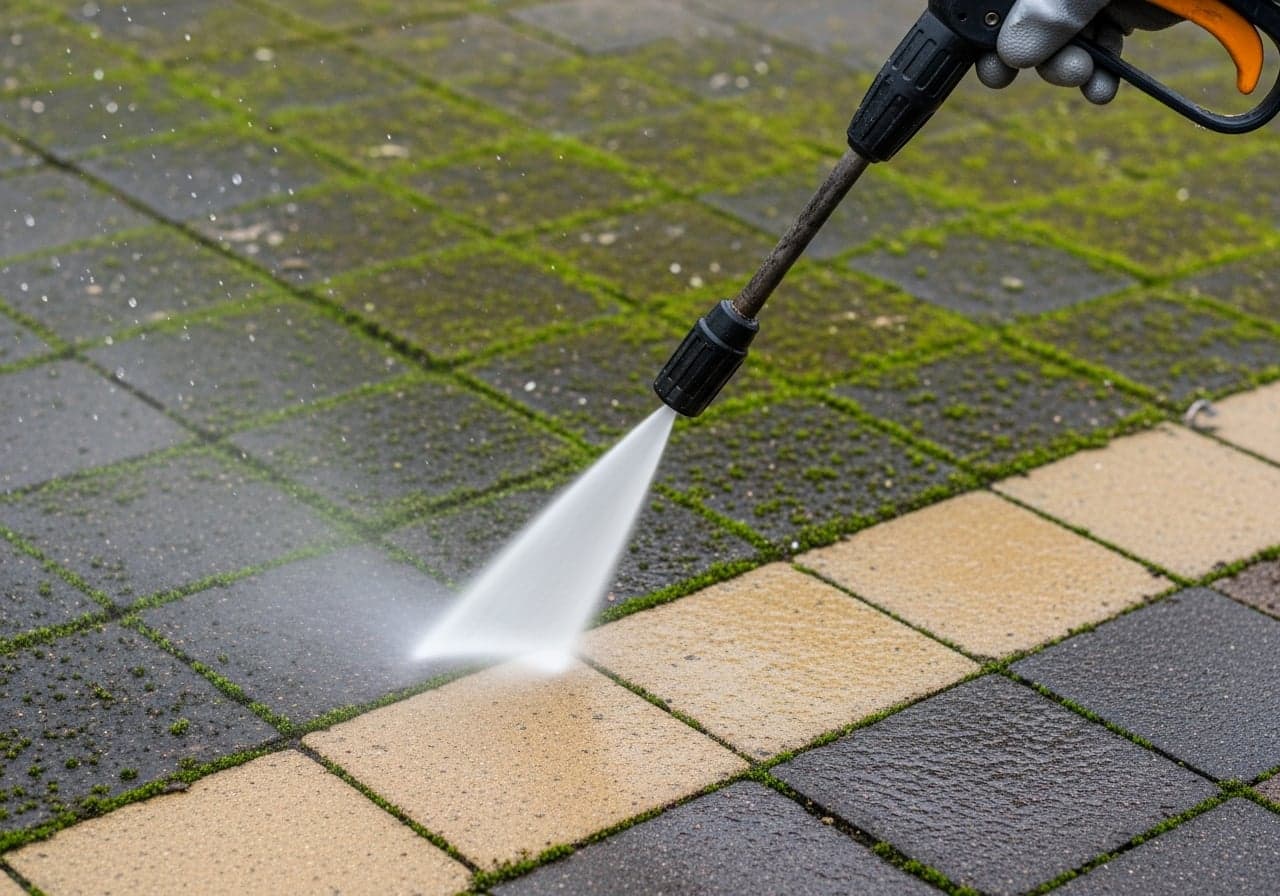
- Detergent, then dwell, then rinse. Pressure alone knocks surface growth off and leaves the spore in the pores, which is why a water-only driveway goes green again fast. The detergent step is what buys you the season.
- Ask where the runoff goes. Beds pre-rinsed before the detergent and rinsed again after, and wash water kept away from the storm drain. This is a real question, not a courtesy.
- Flat rate rather than hourly. A flat rate puts the risk of a slow, heavily grown driveway on the company. An hourly rate puts it on you.
- A named service area.A company listing Langford, Colwood, View Royal and the Westshore by name is quoting a real route. “Serving the region” usually is not.
You can read the Langford-specific service in full on our Langford pressure washing page, see what a soft-wash roof treatment covers on the Langford roof cleaning page, add the windows or the Langford gutter clean to the same visit, or send your address through the free quote form. A local Chirp partner serving Langford picks the job up from the queue with a flat rate and a timing window.